2-Minute Neuroscience: Action Potential
Neuroscientifically Challenged · 359 words · 2 min read · EN-ORIG
Below is the complete, readable transcript of 2-Minute Neuroscience: Action Potential by Neuroscientifically Challenged on YouTube. Read the full text, copy any part you need, or generate a transcript for any video with our free tool.
welcome to 2minute Neuroscience where I simplistically explain Neuroscience topics in 2 minutes or less in this installment I will discuss the action potential the action potential is a momentary reversal of membrane potential that is the basis for electrical signaling within neurons if you're unfamiliar with membrane potential you may want to watch my video on membrane
potential before watching this video the resting membrane potential of a neuron is around 70 molts when neurotransmitters bind to receptors on the dendrites of a neuron they can have an effect on the neuron known as depolarization this means that they make the membrane potential less polarized or cause it to move closer to
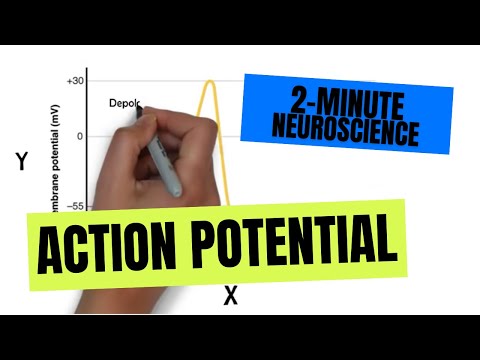
zero this chart shows memory potential on the Y AIS and time on the x-axis when neurotransmitters interacting with receptors causes repeated depolarization of the neuron eventually the neuron reaches what is known as its threshold membrane potential in a neuron with a membrane potential of 70 molts this is generally around 55 molts when threshold is reached a large
number of sodium channels open allowing positively charged sodium ions into the cell this causes massive depolarization of the neuron as the membrane potential reaches zero and then becomes positive this is known as the rising phase of the action potential the influx of positive ions creates the electrical signal known as the action potential which then
travels down the neuron eventually the action potential reaches its peak sodium channels close and potassium channels open which allows potassium to flow out of the cell this loss of positive potassium ium ions promotes repolarization which is known as the falling phase of the action potential the neuron returns to resting membrane potential but actually overshoots it and
Transcribe another video
Paste any YouTube, Instagram or TikTok link to get a free transcript.