Dr. Bhaskar Reddy Podcast: Biochar Transforming Agriculture, Industry & Environment
Dr. Jitu Bandhaniya · 9,291 words · 46 min read · EN
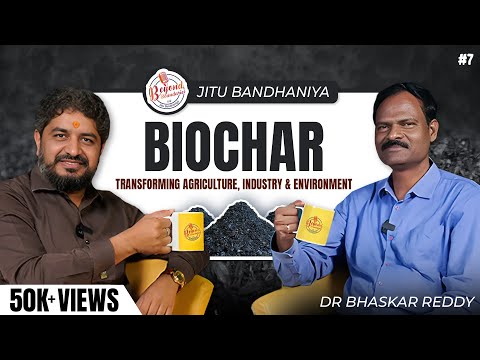
Below is the complete, readable transcript of Dr. Bhaskar Reddy Podcast: Biochar Transforming Agriculture, Industry & Environment by Dr. Jitu Bandhaniya on YouTube. Read the full text, copy any part you need, or generate a transcript for any video with our free tool.
Hello, welcome to Beyond Boundaries with Jeetu Bandar. Whenever you listen to me on Beyond Boundaries, most of my podcasts are in our language, Gujarati. But today I'm talking to you in Hindi because the subject is such, and the person I'm going to talk to is a national personality. The work he does is a huge work, a
very important work, although it hasn't become so popular in our country yet. You've heard of the Green Revolution. It was a big thing for farmers. You've heard of the White Revolution. Now, with the revolution that's about to come with Bio Char, you'll wonder what Bio Char is. A year ago, when I
first heard the word Bio Char from India's richest farmer, Neet Ban Patel, who is the MD of Sajeevani Life, I was surprised that this is such a big work that people don't even know about. It was in connection with that work that I met a person who has been working in the field of Bio Char for 20 years. I
know directly from him what it is. Bio char and an entire industry associated with it [Music] Bask Reddy sir, welcome B Bound sir, the first time I heard the word bio char, I was surprised, I knew it was coal. When I saw it for the first time, for me coal was bio char, bio char coal, but there is
some difference in it scientifically, you have to understand what that small difference is, this is our coal which we call one wood coal, that means even if we set fire to a stove anywhere, coal is formed and the other is the coal which we mine from the ground, that is called fasil, if we call fasil, then once upon a time there were
some living beings or trees in this world, after being buried under the ground, they become coal with a little heat and a little pressure, okay, generally we were using that coal a lot in the railways and it also has some weight, even if someone burns that coal by using a chunda, its pollution in the house is so much that
Transcribe another video
Paste any YouTube, Instagram or TikTok link to get a free transcript.