Stop Translating, Start Speaking English Naturally | Think in English
BOOKISH ENGLISH 2.0 · 6,740 words · 34 min read · EN-ORIG
Below is the complete, readable transcript of Stop Translating, Start Speaking English Naturally | Think in English by BOOKISH ENGLISH 2.0 on YouTube. Read the full text, copy any part you need, or generate a transcript for any video with our free tool.
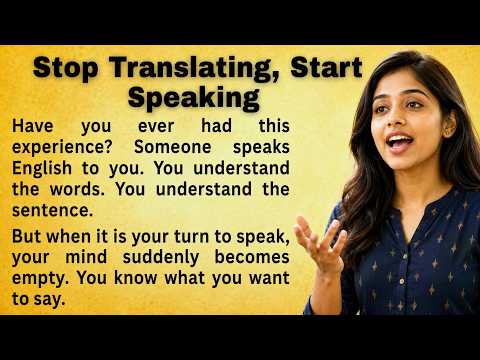
Stop translating, start speaking. Beginner level. Have you ever had this experience? Someone speaks English to you. You understand the words. You understand the sentence. But when it is your turn to speak, your mind suddenly becomes empty. You know what you want to say. You know the English words. But you cannot say them quickly.
You first think in your own language. Then you change the idea into English. Then you check the grammar. Then you worry about your pronunciation. And by the time you are ready to speak, the conversation has already moved on. This is very common. In fact, I see it with many English learners. They study English for years. They learn
hundreds of words. They do grammar exercises. They watch English videos. They even understand English quite well. But speaking still feels difficult. Why? One big reason is translation. You are not really speaking English. You are translating into English. There is a big difference. Today, I want to show you a simple idea. Stop translating.
Start speaking. Now I know what you might be thinking. But I need translation. How can I understand English without translating? That is a good question. Translation is not bad. Translation can help you when you are a beginner. If you see a new word, translation can help you understand it. For example, you see the word apple.
You learn that an apple is a fruit. You may connect the English word with the word for apple in your first language. That is fine. The problem starts when you translate every sentence before you speak. Imagine you want to say, I am tired. You do not need to build the sentence in your head.
You already know it. When you hear, I am tired, you should understand the meaning quickly. You should not need to think, what does each word mean in my language? The whole sentence should become one small idea. I am tired. Feeling tired. Simple. This is how we want your English brain to work. Let me give you a small example.
Transcribe another video
Paste any YouTube, Instagram or TikTok link to get a free transcript.