If I Were Buying My First Solar Setup Again, I’d Do This
Footprint Hero with Alex Beale · 3,185 words · 16 min read · EN-ORIG
Below is the complete, readable transcript of If I Were Buying My First Solar Setup Again, I’d Do This by Footprint Hero with Alex Beale on YouTube. Read the full text, copy any part you need, or generate a transcript for any video with our free tool.
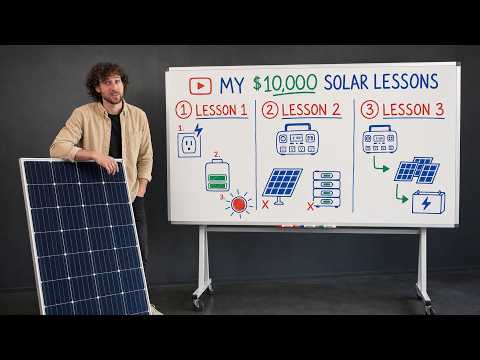
Over the last few years, I've spent $10,000 of my own money on power stations and solar generator setups of all sizes from glorified phone chargers to powerful whole home setups, but not all of them were worth the money. So, today I want to share the three key lessons I've learned so you don't make
the same mistakes as me. Starting with lesson one, learn the three power station puzzle pieces. So, if you look at a specs list for a power station, it is overwhelming. There's like 20 to 30 numbers to look at, but I think that if you're building a solar setup, you should only really pay attention to
three. And I think of them as the three power station puzzle pieces because if you put them together, then you get a pretty clear picture of how the power station will perform in your setup. The first puzzle piece answers the question, what can the power station run? And if you get this wrong, nothing else matters
cuz you won't be able to run the devices and appliances you need. The spec that I'm talking about here is rated AC output, also sometimes called continuous AC output. Its unit is watts. I'm going to mention units, but don't get caught up on the units. Now, if you're a complete beginner, then the specific
numbers that you see for rated or continuous AC output on the specs list will make zero sense to you. So, I'm going to give you a rough idea of the various levels of AC output that you can expect and what you can do with them. So, on the smallest end of the spectrum,
you'll see units like this with rated AC outputs of around 300 watts. That is enough to run everything that you might want to at camp and some of your appliances that you're going to back up during a power outage like a TV, light, Wi-Fi router, maybe even a kitchen fridge, although it might overload
Transcribe another video
Paste any YouTube, Instagram or TikTok link to get a free transcript.