The Incredible Properties of Composite Materials
The Efficient Engineer · 3,159 words · 16 min read · EN
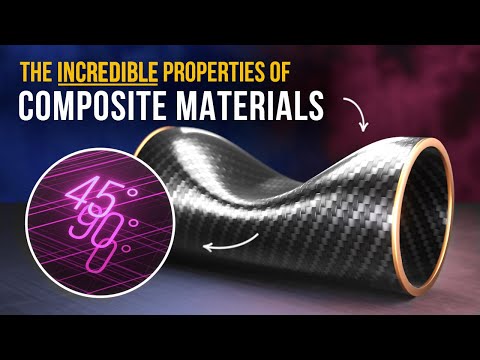
Below is the complete, readable transcript of The Incredible Properties of Composite Materials by The Efficient Engineer on YouTube. Read the full text, copy any part you need, or generate a transcript for any video with our free tool.
The development of composite materials over the last few decades has completely transformed how some of the most advanced engineering problems out there can be solved. It's allowed the development of materials with unique thermal properties that can better handle the blistering temperatures of atmospheric re-entry, for example.
And has pushed the limits of jet engine design through the use of lightweight fan blades that have carefully tailored mechanical properties. But what exactly are composite materials, and what makes them so special? Let's find out. A composite is really just any material made from two or more distinct constituent materials. They can be found in nature - wood is just one example of a natural composite material.
But they can also be engineered, where different materials are carefully combined to develop all sorts of incredible and exotic composites that have mechanical, electrical, thermal or even magnetic properties that have been tailored to suit a specific application. In most composites, one material, called the dispersed phase, is contained within another, called the matrix phase. The ability to carefully select each phase to optimise
the properties of the material for a specific application is what makes composites so powerful. The dispersed phase is usually what provides the desirable material properties, like high strength or improved ductility, and is usually either a ceramic or a metal. Composites are often categorised based on the form of the dispersed material. This is a particle-reinforced composite,
but they can also be fiber-reinforced, either with short, or with continuous fibers. The matrix material is used to form a mechanical and chemical bond with the elements of the dispersed phase, and allows loads to be transferred between them. It holds everything together, and it protects the dispersed phase from the environment. Composites are also categorised
Transcribe another video
Paste any YouTube, Instagram or TikTok link to get a free transcript.